

On February 22nd, 2022, Texas made national headlines when it announced investigations into several trans kids’ families over potential child abuse. Gender-affirming care—which was still legal for minors at the time—“constituted child abuse,” the state argued, and “to protect Texas children” from that abuse, it was willing to pull families apart. To most trans Americans and their allies, the news is often remembered as an outrage, a dramatic escalation in the push to target the healthcare access of trans youth.
I can only remember February 22nd as the day my world fell apart.
I was 15 when I first became afraid that I’d be taken away from my parents. I’d been questioning my gender for a while, and by that point, I was pretty certain that I was transgender. And reading the news from my Austin, Texas bedroom through teary eyes, I only knew that I had to hide. “No matter how bad my mental health gets,” I’d tell myself, “my parents can never know.”
After that, I’d have the same nightmare every night: my parents would find out somehow, and right when they did, I’d lose them. Sometimes, they’d die in a plane crash or freak accident. Others, they’d suffer a heart attack and die before the ambulance arrived. But most often, CPS agents would break in through the windows and take me away from them. Eventually, I became afraid of going to sleep altogether, knowing that when I did, I’d live through my worst fear.
Over time, my mental health continued to decline, and as my depression worsened, suicidal thoughts crept in. Still, my family—my only support system—could never know. I was left to suffer alone and in silence, fearful that if I spoke up, I’d lose everything I still had.
In June 2023, the investigations were replaced by a law, Texas Senate Bill 14, which banned all forms of gender-affirming care for minors. The threat mostly gone, my fears soon began to subside, and the next month, I finally came out to my parents. Although it did take them a while to fully come to terms with me, they did immediately agree to find me a therapist.
Except that search ended up taking two months, as the dozens upon dozens of therapists they contacted would always reply in the same way: ‘We can’t.’ According to them, the state also banned them from ‘facilitating’ gender-affirming care, and because of that, they believed they’d be criminally liable if a trans kid they worked with were to get gender-affirming care in another state.
Feeling hopeless and unable to get care of any kind, one night in early August 2023, I walked up to a ledge in my home and prepared myself to make the jump. Thankfully, at the last second, I decided to dial into a hotline and was eventually talked down. That was the closest I came to taking my life. Although things improved slightly after my parents found a therapist willing to risk seeing me, I’d remain depressed and suicidal until I turned 18 and began hormone therapy shortly after on October 22nd, 2024—exactly 32 months since my nightmare began.
I’m not alone in my experiences, but Texan trans kids are. Even now, Texas is the only state that has ever threatened to take trans kids away from their families over gender-affirming care. Furthermore, Texas is also the only state that doesn’t allow trans kids to seek talk therapy and other mental health/psychological services. Had I lived in another red state, my story would probably be very different.
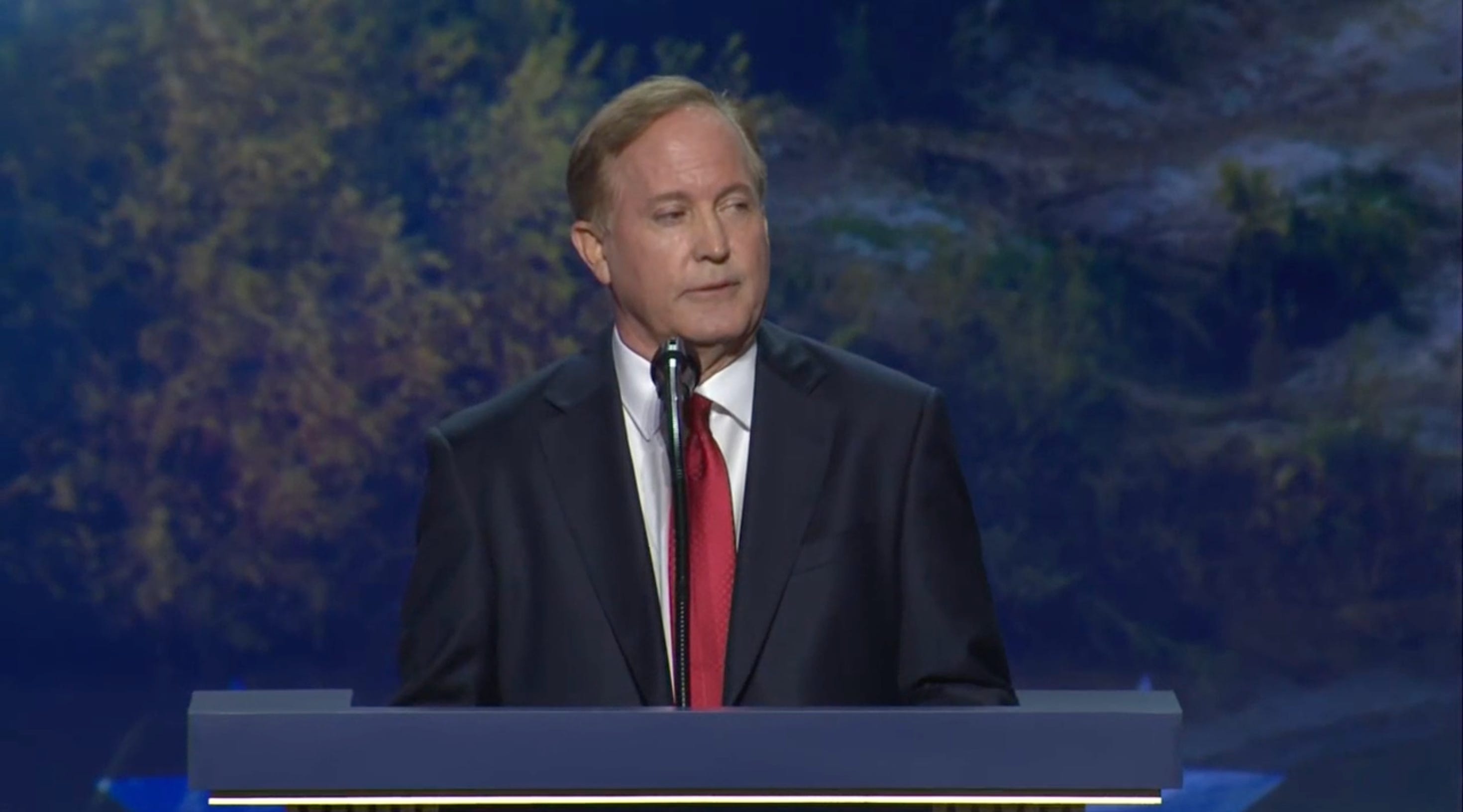
At the center of my story and these restrictions lies one man: Ken Paxton. On February 18th, 2022, he formally asserted that under Texas law, gender-affirming care for minors constituted child abuse, and that opinion formed the sole legal foundation for the state’s child abuse investigations that were announced a few days later. To date, no other state AG has issued a similar interpretation.
And buried deep within that same opinion was a separate claim: “the failure to stop a doctor or another parent from conducting these treatments and procedures on a minor child can…constitute child abuse.” As such, he wrote, “any person that conducts or facilitates these procedures or treatments could be engaged in child abuse, whether that be parents, doctors, counselors, etc.” In March of this year, he released a separate opinion clarifying these statements, writing that any therapists who don’t “assist with ‘stabilizing,’ ‘alleviating,’ or ‘overcoming’ a child’s [gender dysphoria]” would be subjected to criminal penalties. Because most licensed professionals refuse to practice this kind of conversion therapy, these restrictions effectively prevent them from treating altogether. Once again, it must be noted that no other state has implemented anything similar.
No kid should fear losing their parents because the state disagrees with who they are, and no kid should be denied access to talk therapy when they truly need it. Either of these things alone would be considered unfathomably cruel. Together, these destructive policies are killing Texan trans kids just as they almost killed me 3 years ago.
And now, Paxton is seeking higher office. In his Senate campaign, he’s leveraging his record on trans people, and still living in Texas, I often come across his ads. More than once, I’ve found myself tearing up—not about what he’s talking about, but about what he won’t. About the suffering and pain that I and so many other trans kids have endured as a result of his actions; about the fact that so few people know the true extent of his actions that he hasn’t ever had to defend them; and about the fact that Texan trans kids haven’t ever been given the opportunity to speak out against him.
Meanwhile, his opponent, James Talarico, recently made a pair of statements regarding trans rights, saying he “opposes trans athletes playing in girls’ sports if it endangers safety or fairness” and that he’d “absolutely” vote for a ban on gender-affirming surgery for minors. Despite Talarico’s broader record of supporting trans rights, some trans Texans and their allies have threatened not to vote for him over these comments. A few have even threatened to vote for Paxton out of spite. This discourse ultimately helps Paxton, who is facing the most competitive Senate race this state has seen since 1978. Simply put, as a senator, he’ll be given the power to influence policy at a national level, and there’s no telling how he’ll try to use it.
This race is personal to me in a way that it isn’t for others, and I think I speak for every Texan trans kid who has suffered at Paxton’s hands when I say that this is not the way to honor our struggle and it is not the way to honor the lives of those we’ve lost because of him.
Regardless of his comments, the trans community and our allies must coalesce behind Talarico. Not for who he is, but because of what he stands for: a rebuke of Paxton and the pain he’s inflicted. Through this election, we have an opportunity to give Texan trans kids hope—the hope of knowing that the politicians who hurt them aren’t invincible, that their suffering may not last forever, and that a man like Paxton will not be rewarded for what he’s done.
When I was 15, I would’ve given anything for that hope. But my story has been written. Come November 3rd, it’ll be up to Texans to decide whether or not another generation of this state’s trans kids will grow up fearing Ken Paxton’s name.
You may not hear from them now, but I promise you they’re watching. Please make the right choice.
The Trevor Project’s toll-free LGBTQ+ support hotline saved my life. If you are experiencing thoughts of self harm, go to their website or call +1 (866) 488-7386.
Unfortunately, these are the choices we are given as voters. As distasteful as it is, we are always stuck choosing the lesser of two evils. Still like Barack Obama’s former views on gay marriage, Talarico’s views can change given time and education on the subject. I’m not a Texan, and plan on never setting foot in the state due to it’s politics, but even my views can change, given time and change in the great state.
I’m glad you are here, and thank you for sharing your story.