

.jpg)
Two months ago, as part of its ongoing assault on gender-affirming care, the Trump administration finalized a rule banning federal funds from being used to cover care for trans youth through Medicaid and CHIP. Both programs, which are funded jointly by the federal government and individual states, provide health insurance to low-income Americans and, through that structure, allow states to determine what care they will and will not cover. As part of the new rule—which went into effect today—states wishing to continue covering gender-affirming care for minors would need to take on “the full cost of sex-rejecting procedures” with their own funds.
Last Thursday, Transitics reported that Arizona and Virginia—two states with Democratic governors—had responded to the rule by quietly updating their Medicaid programs to begin denying care to trans youth. Being the most unprecedented Democratic capitulation to Trump’s anti-trans demands yet, the news immediately sparked backlash among trans Americans; especially in Virginia’s case, many felt betrayed by the state’s refusal to continue coverage of trans kids’ care. But today, Transitics can confirm that two more Democratic-led states are following in their lead: Colorado and Michigan.
Firstly, and arguably the most problematic, is Colorado. Under full Democratic control since 2018, Colorado has often been at the forefront of passing protective measures for LGBTQ+ residents. Just this past May, the state responded to the Supreme Court’s ruling striking down its conversion therapy restrictions by passing an updated law allowing victims of the practice and their families to sue their providers even decades after the ‘therapy’ took place. And last year, the state also enacted a law mandating that all insurance companies in the state cover gender-affirming care without limitation.
Ironically, the first known violation of that law is now coming from the state itself. On September 18th, the Colorado Department of Health Care Policy and Financing (HCPF) informed providers that “certain Physician-Administered Drug (PAD) services for the purposes of gender-affirming care will no longer be covered benefits for members under 18 years of age.” Two weeks later, HCPF released its full policy surrounding its updated coverage, and it somehow manages to be worse than the policies enacted by Arizona and Virginia. As Transitics reported last week, the federal rule allows for a 6-month ‘tapering’ period for youth currently receiving gender-affirming care where federal funds can still be used. And although HCPF does mention that stipulation in its policy, it also introduced a strange exception:
“Effective October 13, 2026, claims payment for GnRH/LHRH agents prescribed for gender-affirming care therapy for members under the age of 18 will not be allowed… Prior authorization for testosterone, estrogen, progesterone or medroxyprogesterone therapy for members under the age of 18,” the policy reads, “who are receiving and stabilized on therapy for gender-affirming care prior to October 13, 2026, may receive approval to allow for tapering and discontinuation of therapy.”
The exclusion of puberty blockers in the tapering policy isn’t accidental. The state’s prior authorization guidance that was updated the same day mirrors the policy and once again does not allow for a tapering period for trans kids receiving puberty blockers. And like Arizona and Virginia, Colorado has provided no indication that it has notified patients and their families. In doing so, Colorado is going far beyond what even the Trump administration intended—immediately cutting many trans kids’ care and leaving them scrambling for options.
When news first broke of the state’s decision to comply with the rule back in August, HCPF claimed that it “does not have the statutory or budget authority to cover these services without federal funding” despite the negligible impact doing so would’ve had in the state budget. But it’s also worth noting that, as discussed before, the state also lacks the authority to decide not to cover this care. This means that, once forced to choose which law it would violate, Colorado willingly went with the option that harmed trans kids.
Meanwhile, Michigan has been much less public about its plans. In fact, it’s only offered one piece of information signalling its compliance with the new rule: a provider letter titled “Prohibition on Federal and Children’s Health Insurance Program Funding for Gender Affirming Care in Youth” that was sent out on September 9th. In the letter, the Michigan Department of Health and Human Services (MDHHS) announces that it will be amending its Medicaid State Plan to “indicate MDHHS’ adherence to the prohibition of claiming federal and Children’s Health Insurance Program (CHIP) funding for gender affirming procedures furnished to individuals under the age of 18 years with Medicaid and under 19 years of age for CHIP, in accordance with [the new rule].”
However, unlike the 3 other states that have made similar decisions, this letter wasn’t even sent to all of Michigan’s medical providers—it was only sent to around 30, all of which are either ‘Tribal Chairs’ or ‘Health Directors’ for native American communities. Furthermore, only those individuals were given the opportunity to comment on the proposal. Although the details are scant, MDHHS stresses that it “expects this change to adversely affect Native American beneficiaries, Tribal Health Clinics, and Urban Indian Organizations as the SPA will result in a reduction of covered services for these individuals.”
Because this statement can only be true if Michigan were not planning to make up for the lost federal funds with its own funds, this effectively serves as confirmation of Michigan’s capitulation. When compared to Colorado, though, this decision to comply is a little more understandable. The Michigan State House is currently controlled by Republicans who have repeatedly taken aim at the state’s Medicaid funding, and it’s certainly plausible for the state to lack the ability to take on these costs, especially given the fact that its Medicaid program is already running significantly over its budget.
All of that said, there is another state that had indicated it would follow the trend: Delaware. At some point after the rule was finalized, the state added a new page to the Delaware Health and Social Services (DHSS) website titled “Federal Funding Changes for Gender-Affirming Care.” There, it said that it “must comply with this new federal law and will begin to take action to do so” and that “any Delawarean and healthcare provider who is impacted by this new rule will be receiving a notice about the change.”
Nevertheless, when Transitics inquired about what ‘changes’ the state was referring to last Friday, the DHSS said that it “will be continuing that care using state funds” until those funds run out. Delaware’s budget for the year did not include extra funding for gender-affirming care, and Transitics was told this decision came directly from the governor, Democrat Matt Meyer. As such, for the time being, Delaware’s Medicaid and CHIP programs will continue to cover gender-affirming care for trans youth.
And Delaware isn’t alone. 11 other states have confirmed that they will be continuing to cover gender-affirming care by using their own funds. Those states are: California, Hawaii, Illinois, Maine, Maryland, Massachusetts, New Mexico, New York, Oregon, Vermont, and Washington. Interestingly, Maryland’s announcement referenced the fact that, like in Colorado, state law requires that it “provide gender-affirming treatment in a nondiscriminatory manner to all participants.” Thus, in order to comply with both “federal and state requirements,” it said, “Maryland Medicaid will continue to fund GAC services for minors using state dollars.”
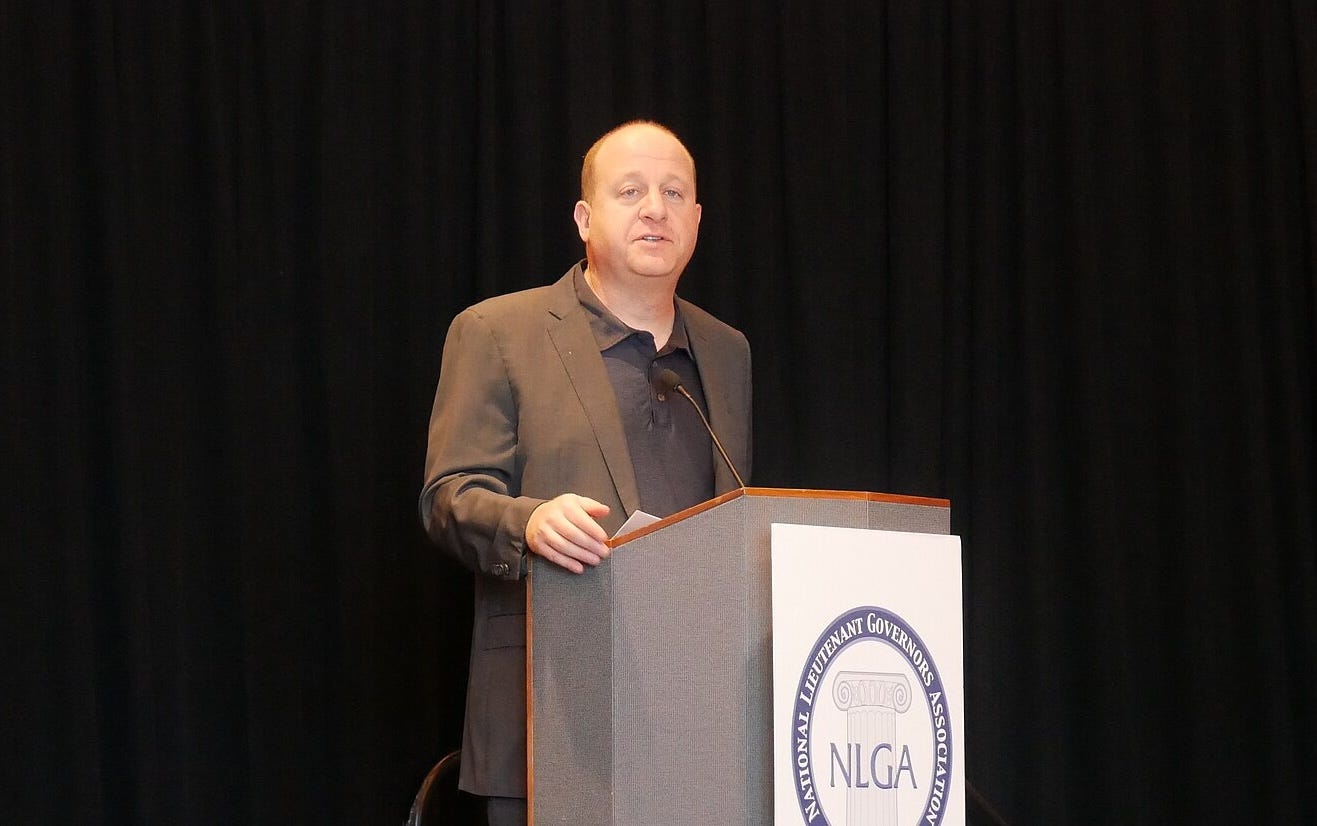
Taken together, these facts establish what we all knew: Colorado’s excuse for its actions is just that—an excuse. Ultimately, when faced with a situation like this, state officials get the final say in which laws they will violate and which laws they will follow, and, as public servants, it is their duty to choose the least harmful option. Simply put, Colorado’s governor Jared Polis has abdicated that responsibility. At virtually every turn, he chose the most harmful option, violating his own state’s laws and needlessly ending coverage of puberty blockers well before Trump’s deadline.
For Colorado and Jared Polis, ‘indefensible’ doesn’t even begin to describe this betrayal.
Of all the people I’ve voted for over the years, Jared Polis is perhaps the one I am most disappointed with as he’s been an abject failure.
as if we ever thought we would be "saved" by democrat losers 😆