

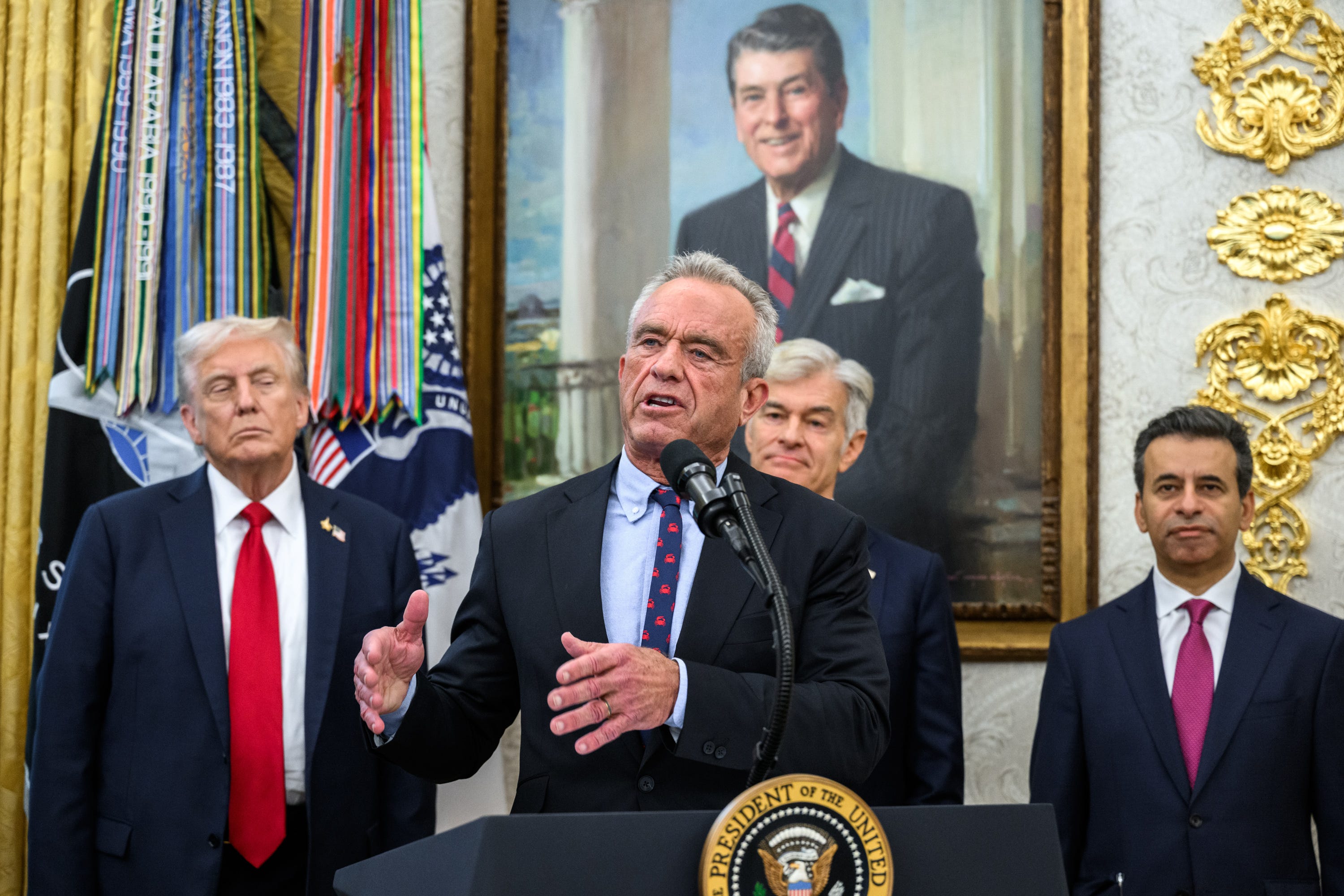
Last year, amid a broader assault on gender-affirming care access, Robert F. Kennedy Jr.’s Department of Health and Human Services finalized a rule targeting insurance coverage for many trans adults. The rule, which made changes to 45 CFR § 156.115’s requirements for ACA marketplace plans, entirely prohibited coverage of ‘sex-trait modification procedures’ unless the state separately mandated that coverage—in which case they would have to shoulder the cost—starting this year.
And for the trans community, this was a big deal: 10% of Americans get their insurance through individual or small group marketplace plans, and worse, 75% of them live in states won by Trump in 2024. As is the case with Medicaid, marketplace enrollment rates are likely higher for trans Americans, potentially leaving tens of thousands vulnerable to the upcoming cuts.
Almost immediately, a coalition of 21 blue states led by California AG Rob Bonta sued the HHS over its new rule, claiming the agency failed to conduct a mandatory review of “what benefits are typically covered by employers” and that the “prohibitions on [gender-affirming care] are a “dangerous intrusion into the practice of medicine” and violate the “sanctity of the patient-physician relationship.” But as that court fight dragged on, some insurance companies started caving to the federal pressure.
In November, Ambetter/Centene, the largest provider of ACA plans, updated its policies to cut coverage of gender-affirming care in 19 states—Alabama, Arizona, Arkansas, Florida, Georgia, Indiana, Iowa, Kansas, Kentucky, Louisiana, Mississippi, Missouri, Nebraska, New Hampshire, North Carolina, Ohio, Oklahoma, South Carolina, and Tennessee. Similarly, in January, marketplace plans under Blue Cross Blue Shield (BCBS)/Anthem in most of those states plus Montana and Texas.
Notably, however, these changes have been somewhat inconsistent across plans. Ambetter’s plans in Texas still retain coverage for gender-affirming care, as do BCBS plans in Arkansas (a fact that notably affects its Medicaid program as well), while BCBS plans in Iowa, New Hampshire, and South Dakota do not mention the exclusion either. Marketplace plans in Idaho and Utah don’t mention gender-affirming care at all, and thus, the only states where all ACA plans appear to be continuing their coverage of gender-affirming care despite the absence of a statewide mandate are the usual two: Alaska and North Dakota. Overall, these cuts have resulted in a loss of healthcare coverage for potentially tens of thousands of trans adults, and with many states moving to cut Medicaid coverage as well, it leaves trans people who are lower income without a way to get insurance for the healthcare they need.
But on Saturday, things took a turn. As part of the case against the HHS’ new restrictions, US District Judge Nathaniel M. Gorton, a George H.W. Bush appointee, granted the coalition’s motion for summary judgement, declaring the rule ‘unlawful’ and vacating it entirely. In his decision, Gorton agreed with the plaintiffs’ claim that the Trump administration had implemented the rule without the required review and separately took aim at the HHS for ignoring a previous decision he had made in connection to the case:
“The Court previously concluded that HHS was required to submit such a report to Congress by January 1, 2026, the effective date of the Rule. HHS still has not done so and the government has not attempted to justify that failure. Indeed, the government does not mention [the federal statute requiring the report] at all in its pleadings. When asked about the issue at oral argument, the government maintained its position that the Agency is not required to submit such a report, notwithstanding the Court’s clear ruling that it was required to do so.”
However, it must be noted that Gorton denied the summary judgement motion for the other four claims—which relate to other changes to ACA plans that were made by the Trump administration as part of the rule—essentially delivering a targeted rebuke of the HHS’ crusade against gender-affirming care. And best of all, it’ll be very difficult for an appeal to overturn, as it was a summary judgement—a decision made without trial after a court finds there to be no real factual dispute, which, in these types of cases, is pretty rare.
Because of the decision, the rule that caused so many trans adults to lose coverage is officially no longer in effect. Starting today, insurance companies like Ambetter and BCBS will no longer be able to lean on it to justify denying trans people proper healthcare coverage, exposing them to lawsuits if they don’t work quickly to reverse their denials. As they create their policies for 2027’s plan year, it’s fairly certain that most of the plans mentioned above will formally reinstate their coverage or at least remove the exclusion. And depending on how they wrote their exclusions, some policy changes may come before then.
Meanwhile, the plans that haven’t implemented it yet, like those in Alaska and North Dakota, now have no reason to, especially given that both of those states are pretty progressive when it comes to recognizing the necessity of gender-affirming care for adults. Finally, it ensures that non-marketplace insurers and state Medicaid programs can’t hide behind it to expand their gender-affirming care exclusions beyond their ACA plans, at the very least preserving Medicaid coverage in states like Arkansas, Indiana, North Carolina, and Utah.
However, the fight might not be over just yet. Although the rule was defeated, the Trump administration could theoretically attempt to implement it again. That said, doing so would take some time due to the HHS having to conduct the review it tried to skip this time around, and this means the earliest a similar rule could be adopted is in 2028.
I know another judge just gave the Trump administration access to trans kids' medical records--you know, so he can violate more children--but at this point, I'm willing to accept any wins we can get.
I'm quite happy for this result. My BCBS plan is partially paid for by the federal government (I am a retired federal employee) and will not pay for gender affirming care. We still have a long way to go.