

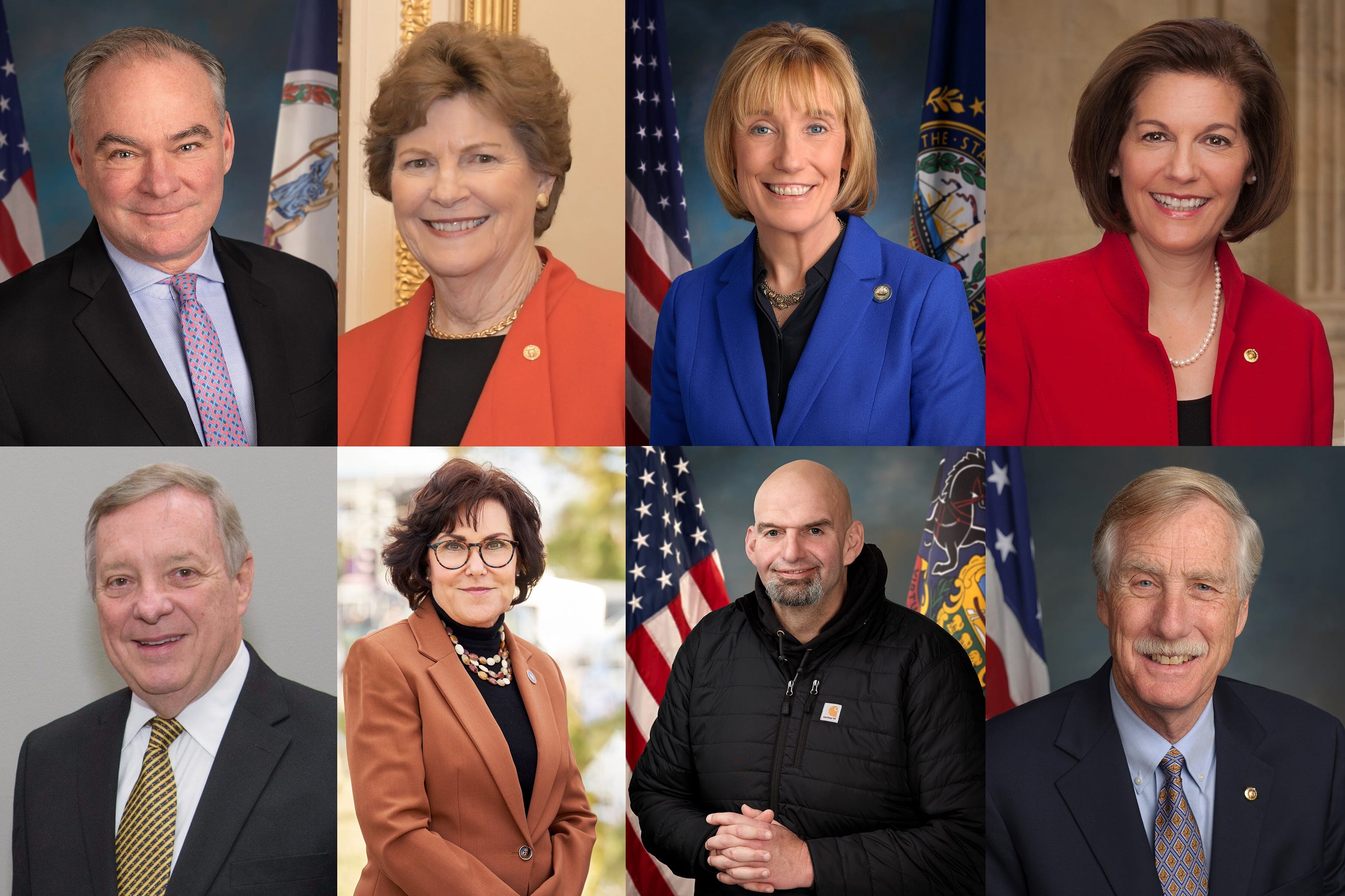
Late last night, President Trump signed Congress’ continuing resolution, bringing the historic government shutdown to an end. The resolution, which was brokered through a shock deal between eight moderate Democrats and all but one Republican, extends funding for the government through January 30th and notably contains no anti-trans provisions. But while agreements like this—which have become more and more common in recent years—are meant to give both parties more time to negotiate over next year’s funding by leaving the previous appropriations bills in effect for a few more months, they usually don’t even come close to specifying what those negotiations will look like. It’s no different here, and that’s a problem.
Since retaking House control in 2023, Republicans have attempted to pass anti-trans riders as part of their versions of appropriations bills, and although these provisions would be swiftly removed by the then-Democratic Senate majority at first (with the exception of last year’s NDAA), this year has been an entirely different story. Now, anti-trans provisions are being added into just about every funding-related bill, and while none of them have passed yet, Republicans have kept trying.
And as I’ve previously covered, there are many anti-trans riders at stake in this year’s appropriations fight. The Labor, Education, and Health and Human Services bill would weaken all LGBTQ+ discrimination protections, ban federal funding from going to gender-affirming care—including therapy—for both adults and children, and codify Trump’s ban on trans participation in sports. The Financial Services and General Government bill aims to solidify the recent exclusion of gender-affirming care from the health benefits of federal employees. And finally, the Commerce, Justice, and Science bill would codify the Trump policies mandating trans inmates be placed according to their ‘biological sex’ and prohibiting them access to gender-affirming care, ban gender-affirming surgeries from being performed in any federal facility, and prohibit funds from going towards “any education, training, or professional development” “that condones an individual feeling discomfort, guilt, anguish, or any other form of psychological distress on account of that individual’s race or sex.”
Worst of all, the shutdown agreement addresses none of these things: as of right now, they’re all still on the table. Those eight Democrats who capitulated—John Fetterman, Tim Kaine, Catherine Cortez Masto, Jacky Rosen, Jeanne Shaheen, Maggie Hassan, Dick Durbin, and Angus King (who is independent but caucuses with the Democrats)—gave away their votes in exchange for the mere ‘promise’ of a vote on extending the Affordable Care Act’s healthcare subsidies. This compromise didn’t remove problematic parts of appropriations bills or even ensure the subsidies would pass. Perhaps more perplexing is the fact that only Senate Majority Leader John Thune promised to vote on the subsidies; the House, led by Louisiana Republican Mike Johnson, did not.
Because of their status as the minority party, Democrats don’t have much say in spending negotiations. Really, their only leverage is that which they have just signalled they aren’t willing to take full advantage of: a shutdown. Now that Republicans know Democrats gave up once, it will be much easier for the GOP to operate on the presumption that Senate Democrats will eventually relent. What incentive will they have to work with Democrats then? Because if the mere threat of a shutdown has the potential to exhaust Democrats’ resolve, Republicans will enter every fight knowing they will almost certainly come out on top.
As a result of the deal—which Sen. Shaheen (D-NH) said Minority Leader Chuck Schumer (D-NY) supported behind closed doors—Schumer has faced increasing backlash from many members of his own party. Especially after Democrats’ resounding election wins last week and with public opinion on their side, Senate Democrats truly had no reason to give in. But now that they did, January’s negotiations are going to be even tougher.
As of today, the chance that one or two of those provisions will eventually make it onto Trump’s desk has never been higher. Upon first glance, the most likely to sneak by are the ones reinforcing what is already the effective status quo, these being the ones concerning gender-affirming care for federal employees and trans sports. While the consequences of these provisions wouldn’t be drastic, and yes, Democrats will be able to simply not pass them again should they retake either the House or the Senate in 2026, that’s not what matters here.
The bottomline is: each year Republicans have failed, their proposals have only gotten more extreme. But if they’re finally able to see some success over anti-trans policies, the floodgates will be open. Like in Florida, Texas, and dozens of other states, they won’t be satisfied. Should centrist Democrats capitulate again in January, there’s no telling how far Republicans will take it.
I'm disappointed in the Senate Dems. Fingers crossed the midterm elections result in more progressive Dems in Congress.
Thank you for this think piece. It's poignant and necessary though it fills me with dread. I didn't think I would be here 18 months after beginning my medical transition ready to give everything I have to stop the attack on trans rights. But, so it goes. Let's keep fighting and pushing our supposed allies to keep having our backs.