

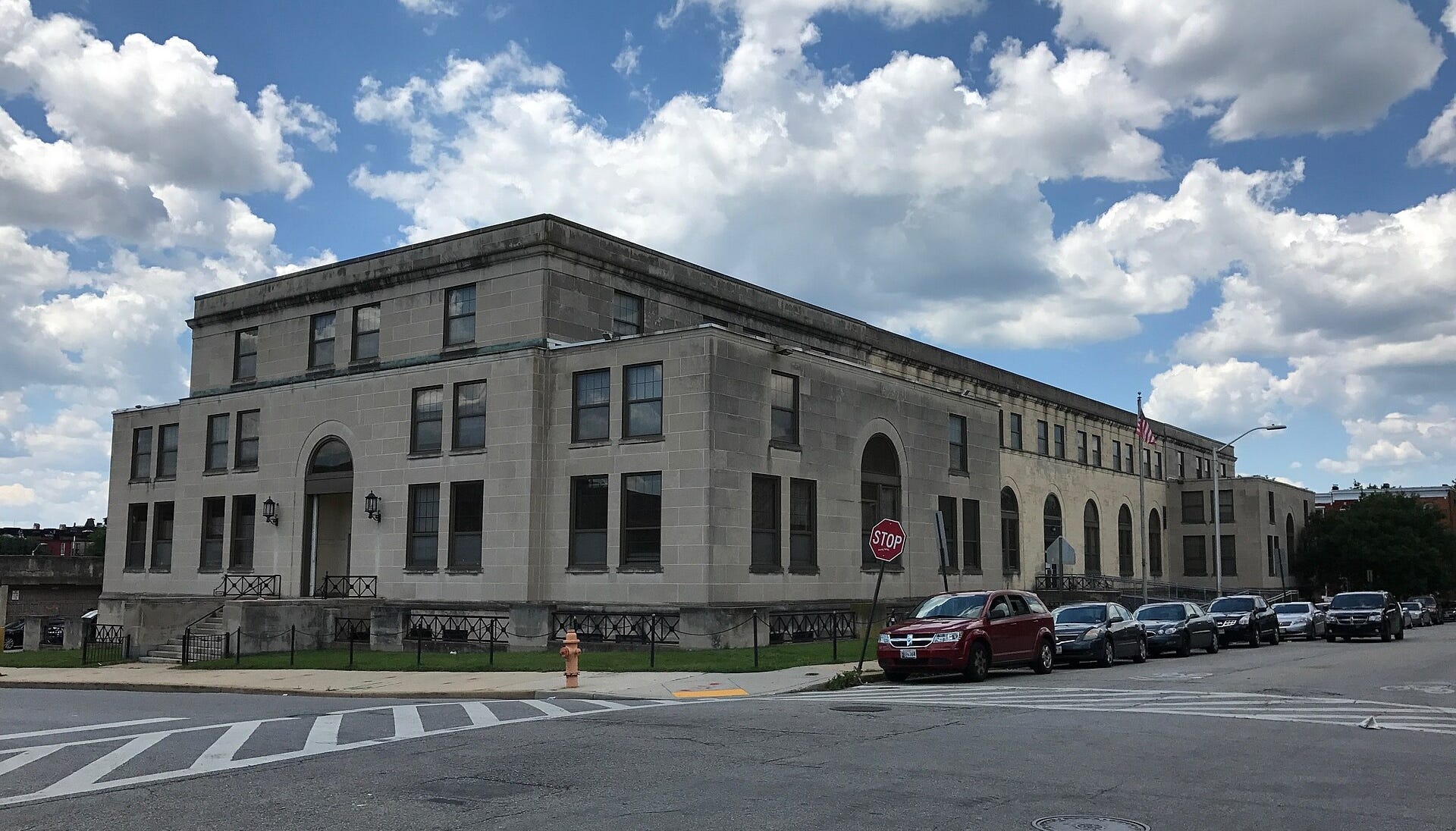

In September, the Maryland Department of Public Safety and Correctional Services (DPSCS) quietly released new policies concerning trans people who are incarcerated in Maryland prisons. Although these changes are usually routine in solidly Democratic states like Maryland, this time is different.
Up until now, Maryland has had more restrictive policies than all other Democratic-led states as well as many of their GOP-led counterparts, strictly housing trans people “according to physical genitalia” while entirely refusing to provide the gender-affirming surgeries necessary for them to be housed in facilities aligning with their identities. As a result of these policies, almost all trans women incarcerated in Maryland prisons had long been housed in men’s facilities, where they face unacceptably heightened rates of sexual assault and violence.
Indeed, according to a report released by the DPSCS last year, nearly 45% of the trans people in DPSCS custody filed sexual assault complaints between 2022 and 2025. In this same period, the state paid $543,000 in settlements to trans people over those complaints; as per CBS’ reporting, this figure accounts for 40% of the state’s recent settlements, despite trans people making up less than 0.7% of the total DPSCS population.
Over the past few years, many formerly incarcerated trans Marylanders have come forward about the abuse they faced while in the system. One woman, Kennedy Holland, was housed in either men’s facilities or in isolation throughout the duration of her five-year sentence despite having started her transition at the age of 13. She told the Maryland Sun in 2023 that she was given an ‘added punishment’ just for being trans. Holland is currently involved in a lawsuit against the DPSCS for the abuse she and a few other trans women faced while incarcerated. Other challenges have also alleged difficulty in accessing gender-affirming hormone therapy, which the state has ostensibly provided since 2011.
Under the new policies, however, these things are finally slated to change.
One of the two new policies created by the department is Directive OPS.230.0010, which is known as “Identification and Correctional Management of Transgender, Intersex, and Gender Nonconforming Individuals,” and it details new standards for the placement of trans people in DPSCS prisons. Aside from rescinding the longstanding policy of housing trans people according to their genital status, OPS.230.0010 allows incarcerated trans people to request to be transferred to facilities that align with their gender identity. According to Transitics’ data, this request policy is only mirrored in eleven other states; a twelfth, Wisconsin, has a similar structure but additionally requires that the person have received at least one year of hormone therapy.
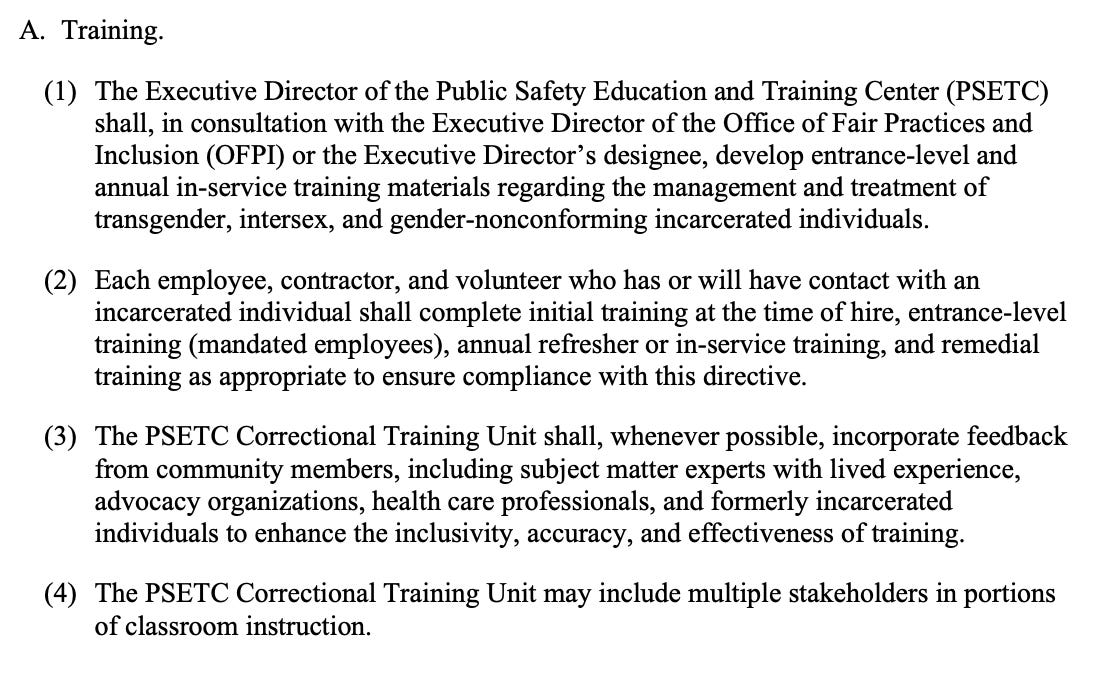
Furthermore, OPS.230.0010 also stipulates that the department “develop entrance-level and annual in-service training materials regarding the management and treatment of transgender, intersex, and gender-nonconforming incarcerated individuals.” Anyone affiliated with DPSCS “who has or will have contact with an incarcerated individual” will be required to complete these trainings at least once annually, including “employees, contractors, and volunteers.”
Although trainings don’t always translate into action, this represents a meaningful step in the right direction, constituting the first time that Maryland will provide dedicated trainings to correctional officers on the issues that trans people face. This hope is further bolstered by the fact that the policy states that the trainings will “whenever possible, incorporate feedback from community members including subject matter experts with lived experience, advocacy organizations, health care professionals, and formerly incarcerated individuals to enhance the inclusivity, accuracy, and effectiveness of training.”
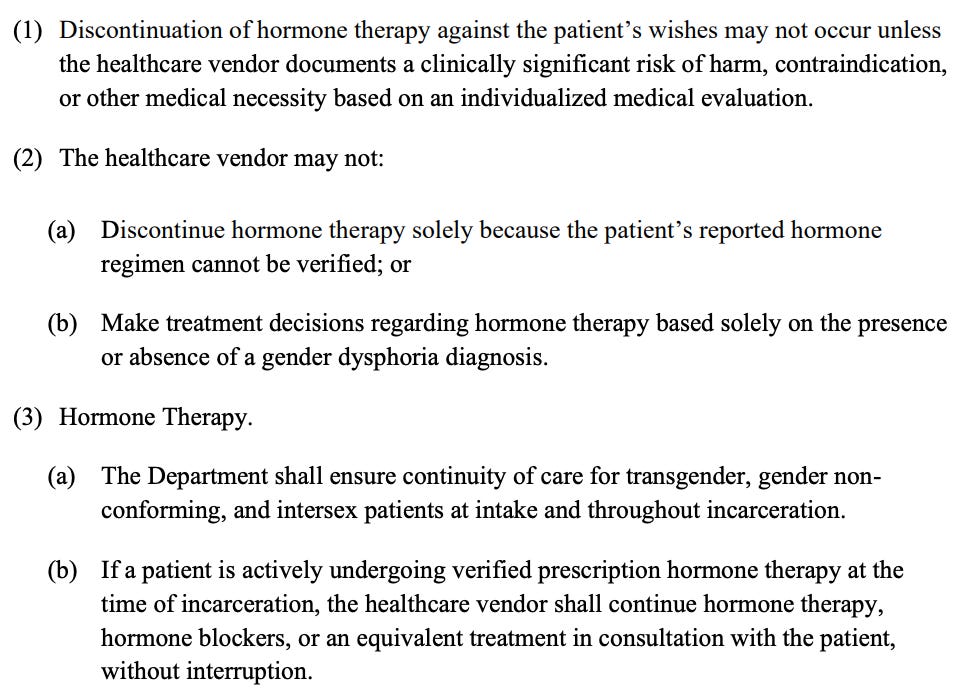
Secondly, the Maryland DPSCS also updated its gender-affirming care policy. Added as Chapter 7 of OPS.130.0003, titled “Transgender, Gender-Nonconforming, and Intersex Healthcare,” the new policy finally allows trans people in DPSCS custody to be evaluated for and receive gender-affirming surgeries. At the same time, it also includes protections against the “discontinuation of hormone therapy against the patient’s wishes,” going as far as stipulating that a gender dysphoria diagnosis is not required for a person to receive hormone therapy.
It must be noted that the latter provision is unprecedented, even among blue states. Indeed, policies concerning trans people in prisons usually operate under a highly medicalized framework where a subjective diagnosis of gender dysphoria is treated as a requirement. These policies often harm individuals who identify as non-binary, genderfluid, or otherwise fall outside the gender binary, whose medical needs vary greatly and may not be best understood under a gender dysphoria framework.
And the fact that these policy changes came without being mandated by a lawsuit is particularly notable, especially given how hostile DPSCS has been to accountability over the issue. Just last year, Maryland lawmakers had to pass a law withholding $100,000 in funding for the department in order to force it to release the above-mentioned report, which it had refused to publish for unknown reasons.
Nevertheless, as a result of the new policies, Maryland’s prison system will go from one of the more hostile to trans people (and the most hostile out of any blue state) to one of the most protective—a massive victory for advocates who have spent years fighting against the DPSCS for better treatment. Amid many states rolling back their policies—including the implementation of new care bans in Missouri, Oklahoma, and Texas over the past few months—it demonstrates that change isn’t only flowing in Republicans’ direction; every so often, states like Maryland will do the right thing.
Because no matter how entrenched these hateful policies may be, it’s never too late for things to change. Perhaps one day, Republican-led states will follow suit.